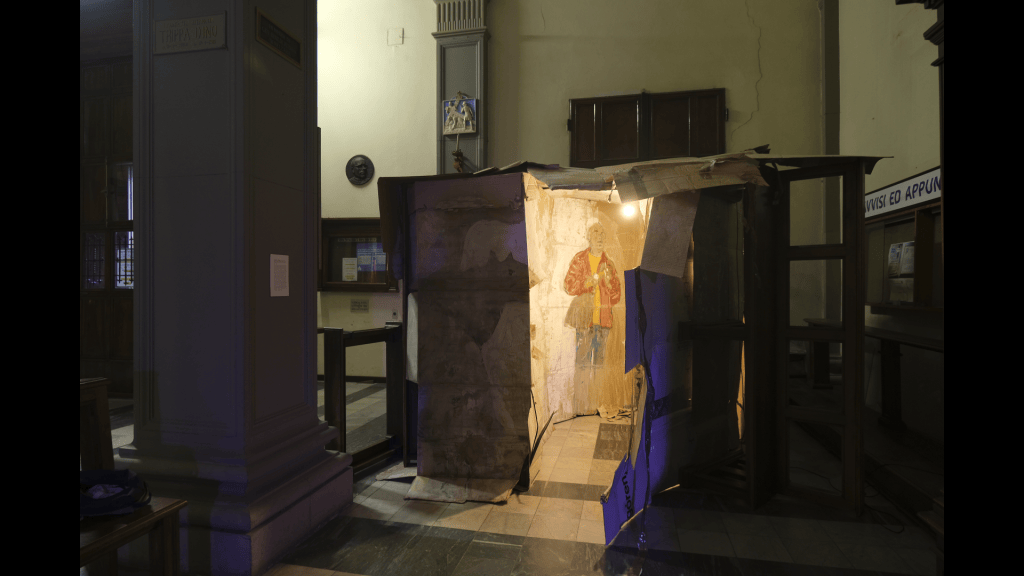
Fourth installment in the series of temporary and unstable memorials Wish You Were Here (Mick), created in memory of the Slovenian artist Dušan Merklin, Mick (1954–2016). At In Limine, Santa Maria delle Grazie Church of Bologna in the framework of the Festival Francescano of Bologna, September – October 2026. Curated by Irene Fedele.
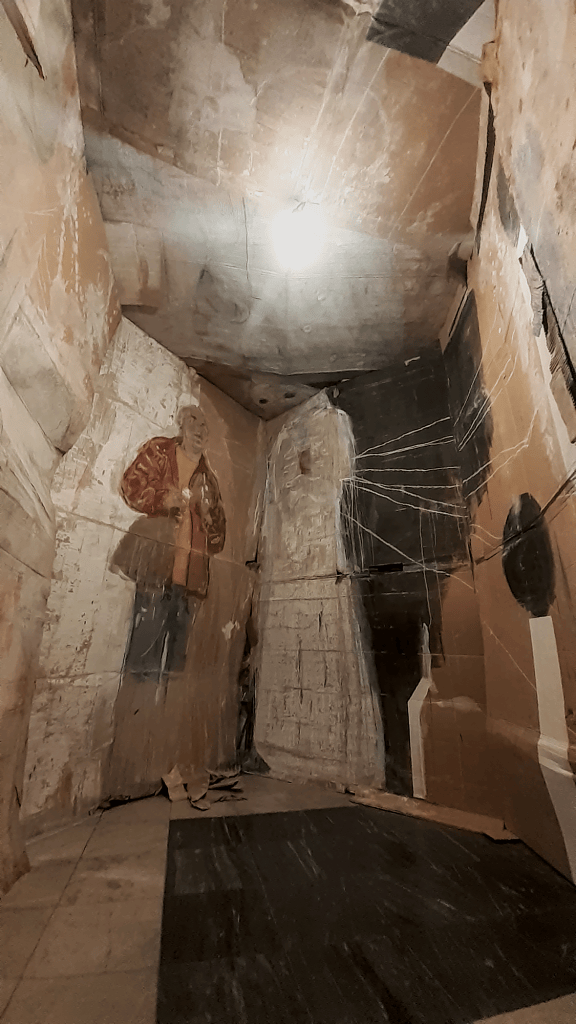
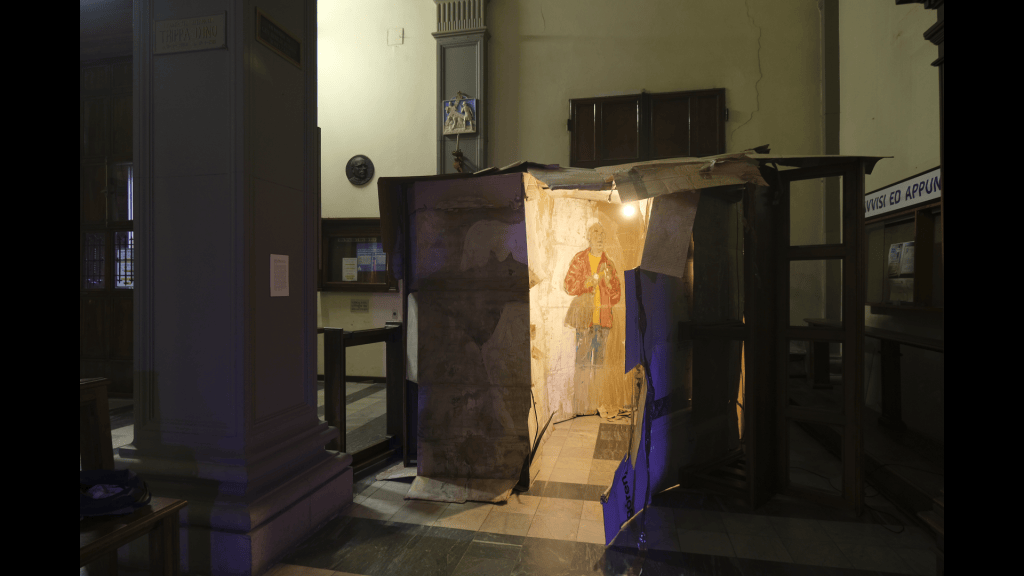
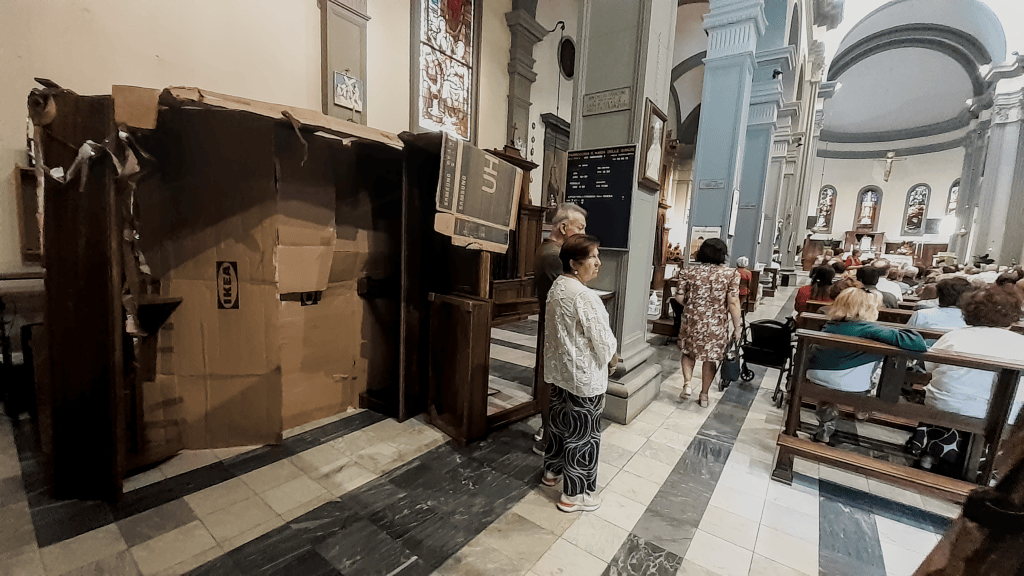
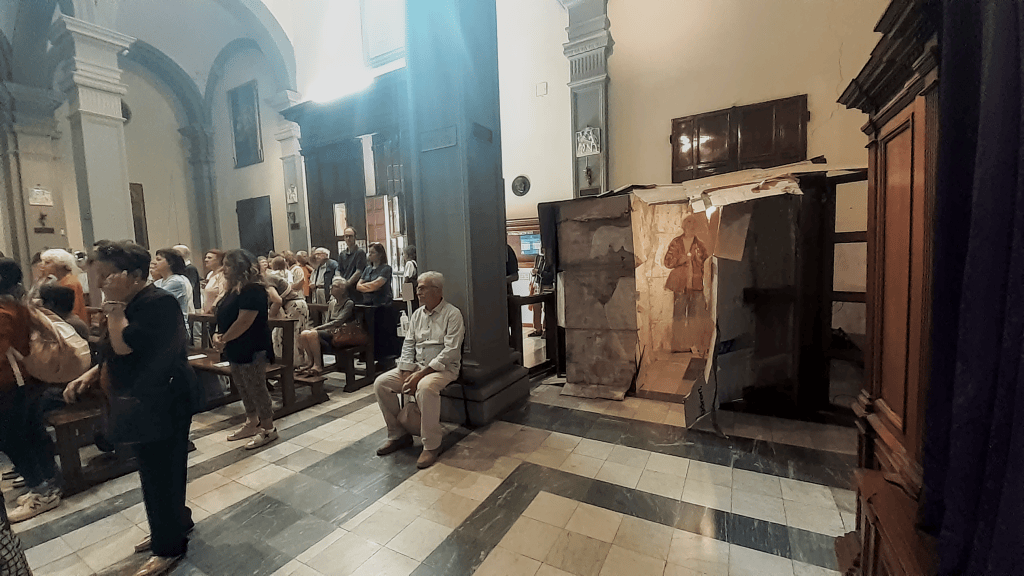
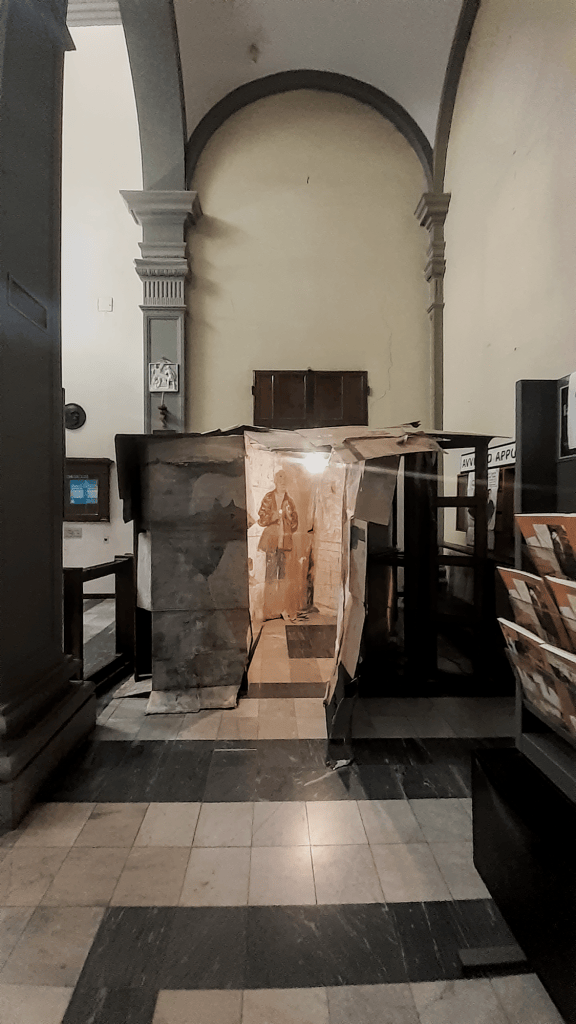
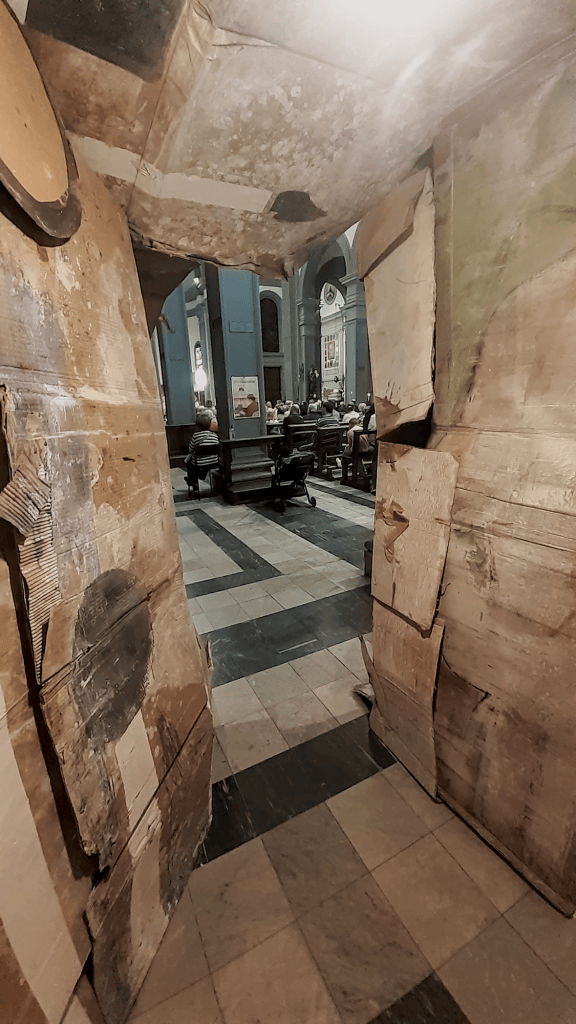
The painted cardboard pieces used to construct the mural in the public space Wish You Were Here (Mick) III (Koper, Slovenia, 2024), were transported inside the church of Santa Maria delle Grazie, where—using the church’s own pews as a support structure—they were assembled into a capella located next to one of the entrance doors.
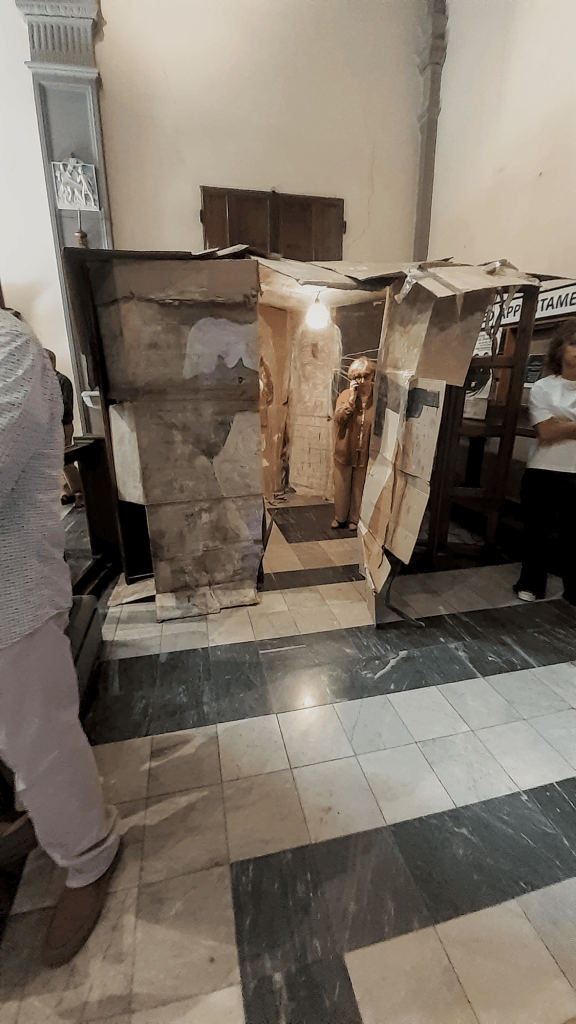
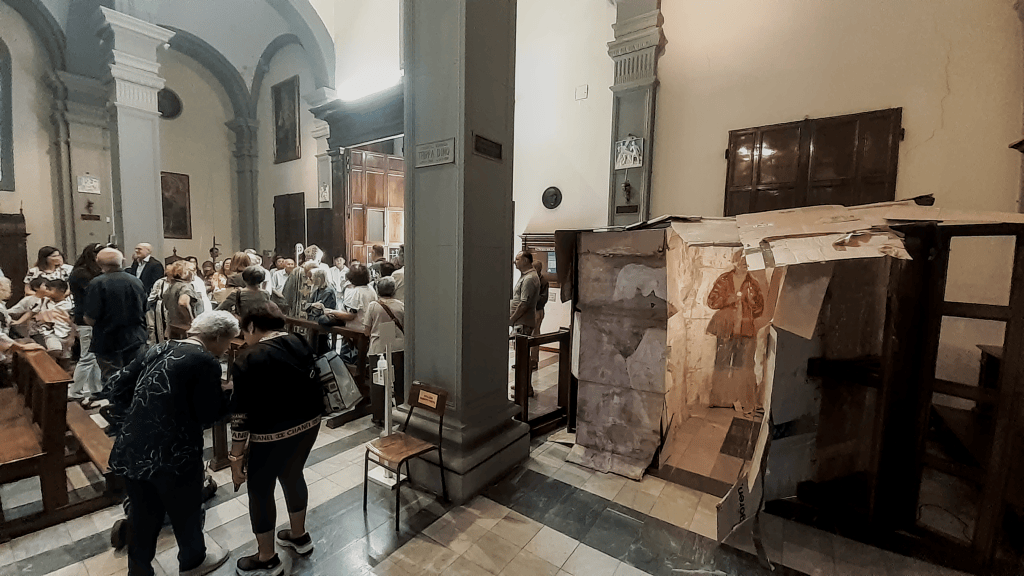
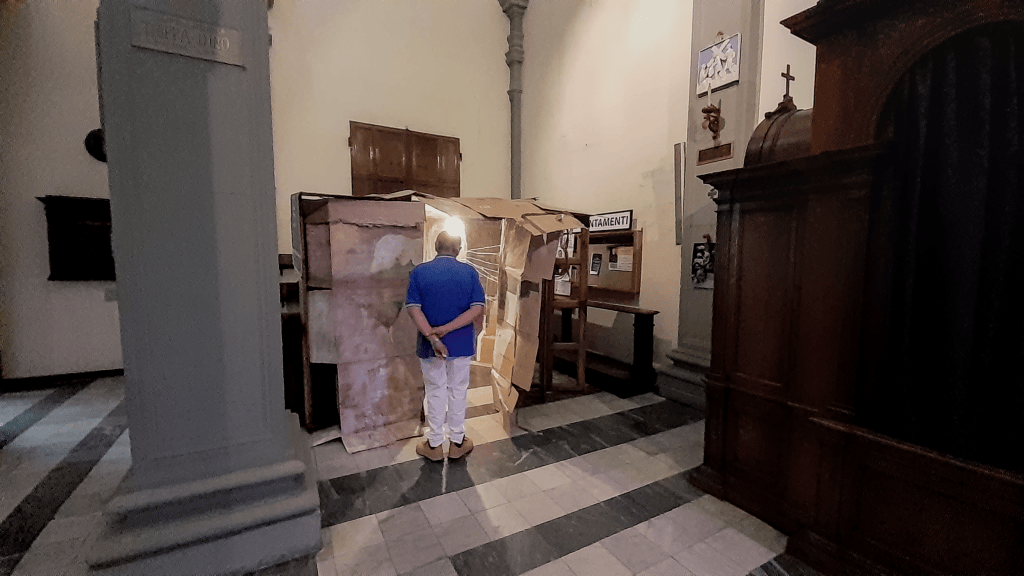
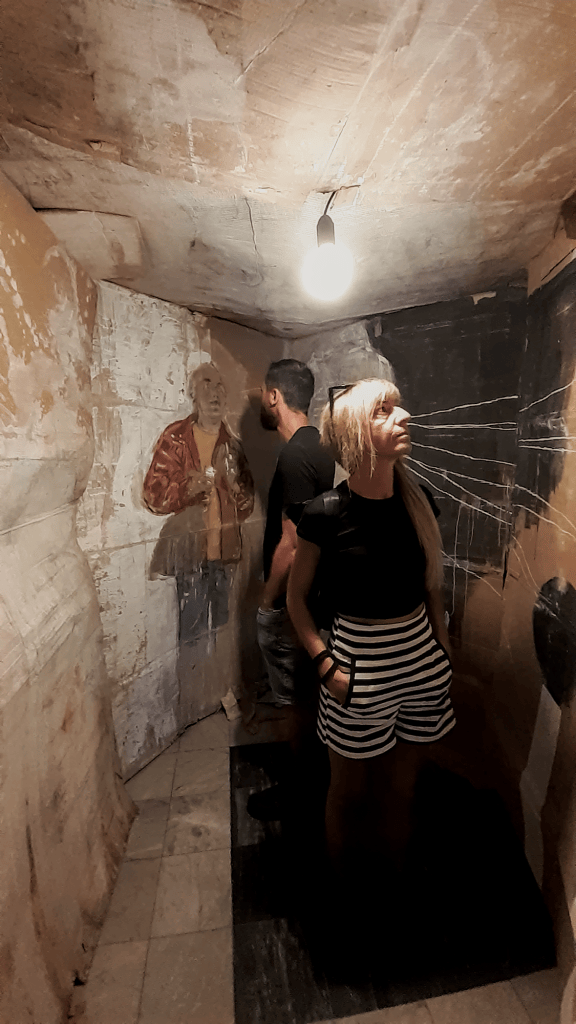
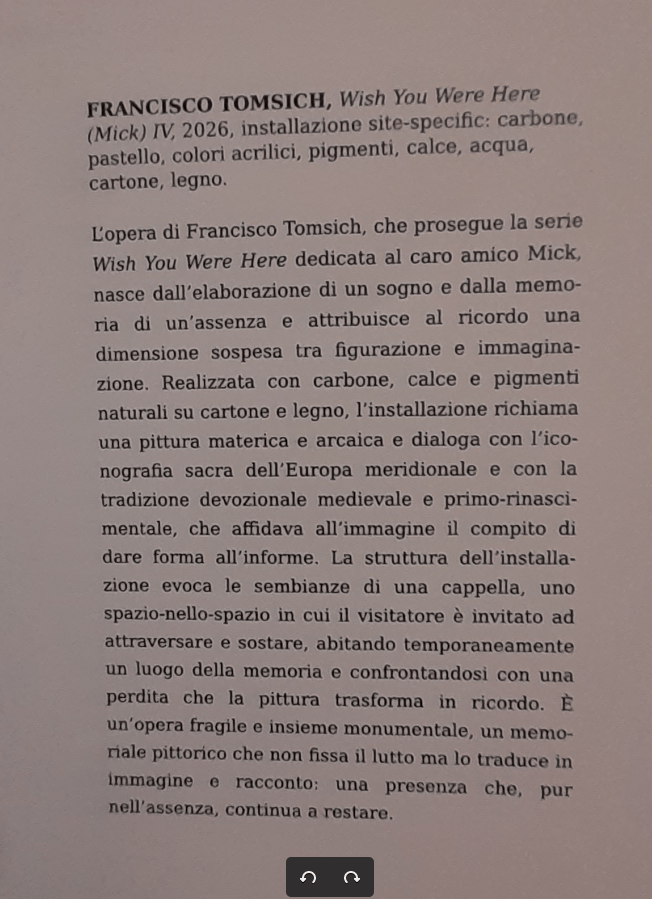
The work—understood as a studio-based compositional process, involving sketches and the development of the various cartoons that would eventually form the final frieze or mural (which I was unable to see in its entirety until it was installed in its exhibition space)—can be viewed as an attempt to construct a visual narrative through the interpretation of a dream. This accounts for the dreamlike, somewhat fragmentary, hazy, and almost sketchy quality of the graphic elements. From a technical standpoint, however—despite this seemingly rough appearance—the work represents a rather sophisticated application of methods I began developing around 2010, when I started experimenting with fresco-painting techniques on unconventional surfaces such as wood, canvas, or cardboard. Charcoal, milk, lime, and archaic, elemental natural pigments are humble, fragile materials, yet they are rooted in a tradition that spans millennia. Within the context of this exhibition, the work is not only linked to the overarching theme—a “narrative” exploration of transition, the threshold between active life and another state reached through death, presented as a drama unfolding within a dream—but its colors, tonality, and overall appearance also engage in a dialogue with European religious art, specifically that of Southern Europe (including the Balkans) up to the High Renaissance. For this reason, I have chosen to present the piece as an installation—a “space within a space” inside the church, akin to a chapel. This completes the work’s purpose as a “memorial-monument” to Mick, the individual who serves as the protagonist of the dream—a dream that evolved into a narrative, and subsequently into a visual apparatus. (Francisco Tomsich, correspondence with Irene Fedele, curator of the exhibition).

